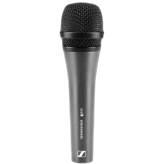
Lewitt LCT 840 Reviews: See Why 0 Shoppers Rated It 0 Stars!
Curious about the Lewitt LCT 840 microphone? Before you commit, see what 0 musicians thought about these Lewitt microphones — from real-world use to surprise letdowns.
 Supermod
  Moderator
 Recaptor
 Lewitt LCT 840 Microphone Review: A Studio Powerhouse Built for Professionals
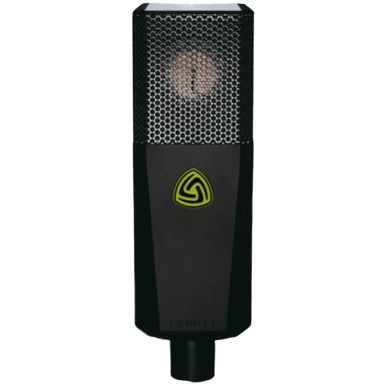
In the competitive world of professional audio recording, the Lewitt LCT 840 rises as a versatile condenser microphone crafted specifically for studio engineers, instrumentalists, and vocal artists seeking impeccable sound capture. Launched in 2012 and proudly designed in Austria, this microphone is positioned as a premium option within the LCT Series.
With its multiple polar pattern options and robust build, it promises high-fidelity recordings with nuanced detail, making it a compelling contender among large-diaphragm condenser mics. On paper, its specifications suggest powerful adaptability and professional-grade quality, but does it truly meet the stringent demands of its intended use?
Detailed Specs & Features
The LCT 840's foundation lies in its large diaphragm condenser capsule, which grants it the ability to capture wide frequency ranges, from a low 20 Hz up to a crisp high 20,000 Hz. This wide spectrum capacity ensures that both deep bass and bright treble are rendered with clarity. Additionally, the mic offers an extensive polar pattern selection: cardioid, omnidirectional, supercardioid, and figure-8, allowing remarkable flexibility for different recording contexts, from solo vocals to ensemble instrumentals.
The engineering choices extend into its transformer-based design, contributing to a rich, warm sound character that many associate with tube microphones. With a signal-to-noise ratio of 85 dB and an impressively low equivalent noise level of just 9 dB, the mic is well equipped to pick up subtle performance nuances without interference or hiss. Not to mention, a maximum sound pressure level (SPL) handling of 139 dB means it can comfortably handle loud sound sources without distortion.
Its connectivity interface is classic and reliable, employing a balanced XLR connection with a detachable cable for ease of setup, while being shielded against RF interference to maintain signal purity. The mic does not require phantom power due to its passive design, which is somewhat unusual for condensers but allows compatibility with devices lacking that capability. The microphone's studio-grade internal preamp ensures a strong, clean output, enhancing recording integrity with minimal distortion.
User Experience & Performance (Based on Specs)
Design & Build
Constructed from sturdy zinc with a matte finish, the Lewitt LCT 840 is built to last in professional settings. Its relatively compact frame, measuring approximately 7.5 inches wide and just 2.4 inches in depth and height, makes it practical for studio use without being cumbersome. The inclusion of an internal shock mount and detachable external mount improves handling noise reduction and mounting versatility, contributing to cleaner recordings. Meanwhile, the metal grill and composite dampening materials inside suggest strong corrosion resistance, an important factor for long-term durability, especially in demanding environments.
Performance
What makes this microphone notably impressive is the continuous multi-pattern switching, a feature that lets users fine-tune the polar pattern seamlessly during sessions. Its low total harmonic distortion (THD) of 0.1% supports clarity and natural sound reproduction. With a transient response rated medium, the mic strikes a balance between capturing sharp attack transients and smooth tonal detail; quite suitable for vocals and various instruments alike. The built-in headroom of 132 dB safeguards against distortion when recording dynamic passages, a detail appreciated by seasoned audio professionals.
Audio Quality
Audio delivery aligns with studio standards, supported by the mic's 130 dB dynamic range, enabling it to handle everything from whispers to powerful brass blasts with precision. Although lacking a built-in low-cut filter or proximity effect control, the mic's pressure gradient acoustic principle supports natural voice isolation without artificial coloration. While it does not feature voice isolation or advanced DSP processing, its studio-grade components carry an authority that most users will find dependable in all recording categories.
Extra Features
Though minimalist in terms of onboard controls, limited to knobs and an on/off switch, the presence of LED indicator lights assists in user feedback during operation. The microphone's passive power source design means it doesn't need batteries or phantom power, which, on the flip side, reduces complexity but requires external power compatibility. Included accessories like a durable carrying case and quality cables add practical value, secured neatly within a hard case packaging that aids professional transport and protection.
Pros & Cons
Pros
- Extensive multi-pattern switching enables flexible recording configurations.
- Excellent signal-to-noise ratio and low equivalent noise level yield quiet and detailed sound capture.
- Robust zinc body with internal shock mount enhances durability and noise reduction.
- Transformer-based design provides a warm, musical character appreciated in professional environments.
Cons
- No phantom power support limits some compatibility with common audio interfaces.
- Lacks onboard digital features such as DSP processing or noise cancellation common in newer models.
- No proximity effect control or low-cut filter limits mic tailoring in challenging acoustic environments.
Price & Value for Money
Priced at $1199 at GuitarCenter.com, the Lewitt LCT 840 falls squarely in the professional microphone segment. Given its two-year warranty, transformer-based construction, and comprehensive continuous pattern switching, the pricing feels justified. Users who prioritize analog warmth and robust build over modern digital features will find its value compelling. However, those seeking integrated phantom power or adjustable onboard digital controls might look elsewhere. Ultimately, the LCT 840's pricing reflects its legacy as a studio-grade microphone tailored for nuanced, high-fidelity recordings.
Quick Take
In short, the Lewitt LCT 840 is a thoughtfully engineered condenser microphone excelling in sound fidelity and versatility for professional studio work. If we look at the numbers alone, including its broad frequency range, impressive SPL handling, and multi-pattern flexibility, it's clear this mic stands out for users favoring classic analog audio character. Its robust build and quality internal preamp underscore its suitability for serious recording environments.
Closing Recommendation
Based on the technical data, the Lewitt LCT 840 may be ideal for professional musicians, producers, and audio engineers who value a rich, transformer-coupled sound and refined polar pattern control. It appears to perform best for studio recordings where analog warmth and multi-directional capture are priorities, rather than live sound use or plug-and-play USB setups. This microphone helps users achieve detailed, natural recordings with a timeless sonic signature proven through its certified specs and design precision.
Verdict
Rating: Based on the specifications and overall feature set, we believe Lewitt LCT 840 deserves 4.6 out of 5.
- Winner Feature => The extensive continuous multi-pattern switching delivers unmatched versatility in professional studio contexts.
- Needs Improvement => Lack of phantom power support and onboard DSP features limits flexibility with modern digital recording workflows.
Reviews 0
The good, the bad, and the brutally honest.Average Rating


More Microphones 1229
Unlock more awesome finds.